 MAMorocco
FTX payout blocked in Morocco? What to do before the deadline
Morocco is on FTX’s list of countries where no payout provider works, and the six-month deadline is approaching. What it means for your claim.
Read →If your country is on FTX’s restricted list, you can’t receive the payout yourself: at step 8 of the claims portal there is no payout provider (distribution service provider, or DSP) to choose. But you can sell your claim and get USDT or USDC. The transfer is registered with the US bankruptcy court, and after that FTX pays the buyer.
FTX is already paying creditors, but not all of them. If you live in a restricted country, your payout gets stuck at step 8. Here is why it happens, what your options are and how to get your money through a claim sale.
FTX pays creditors only through three payout providers: BitGo, Kraken and Payoneer. You pick one at step 8 of the claims portal (claims.ftx.com). In the 43 countries and territories on FTX’s list as of October 30, 2026, including mainland China, Russia, Belarus, Egypt and Morocco, none of them works, so there is nothing to pick.
It isn’t about you or your documents. You may have passed KYC without any problem: the block is on the payout itself.
Start by checking your claim status and payout eligibility; use the FTX KYC guide for an identity-check problem. Before you consider a sale, check what FTX has already paid and what rights remain.
FTX says a creditor who doesn’t onboard (register) with a payout provider within six months of the July 31, 2026 distribution may lose the right to their distributions. That window closes around January 31, 2027. FTX also says that if no provider can serve your jurisdiction, your distribution is deferred to a later date. It hasn’t said when, or whether, providers will open in the restricted countries.
Before contacting support again, check who handles FTX claim and distribution questions, so a question about funds reaching your account goes to the team responsible for that stage.
For the dates of announced distributions, see the FTX payout calendar.
Compare both options for the same remaining rights, leaving out payments you have already received.
| What changes | If you wait | If you sell |
|---|---|---|
| Rights you hold | You retain your remaining claim rights, subject to the claim documents and applicable procedure. | You transfer only the rights specified in the agreement. |
| Future distributions | Distributions on your rights stay yours, subject to FTX requirements. | Distributions attributable to the sold rights belong to the buyer. If you keep a share, the agreement says how payments are split. |
| Money from a sale | There is no sale price: you continue waiting for FTX distributions. | You receive the agreed purchase price for the rights sold. It is separate from an FTX distribution. |
| Selling a share | Nothing is sold: all your rights stay yours. | The agreement specifies the share sold, the share retained and how later payments are handled. |
To work out what is left to sell, take into account the payments you have already received, and do not count the same payment twice.
Enter your Unique Customer Code: we’ll show your tokens and the total from the public creditor list.
Enter your Customer Code in our calculator and see your tokens and the total.
Send the claim amount and class, or your Customer Code. We reply with an indicative price. Free, no obligation.
Online, with your passport, in English, Russian or Chinese.
The final price is written in the agreement. You can show it to a lawyer first.
We file the Notice of Transfer with the US bankruptcy court. It is a public document.
In USDT or USDC to your wallet. Payment terms are set out in the agreement.
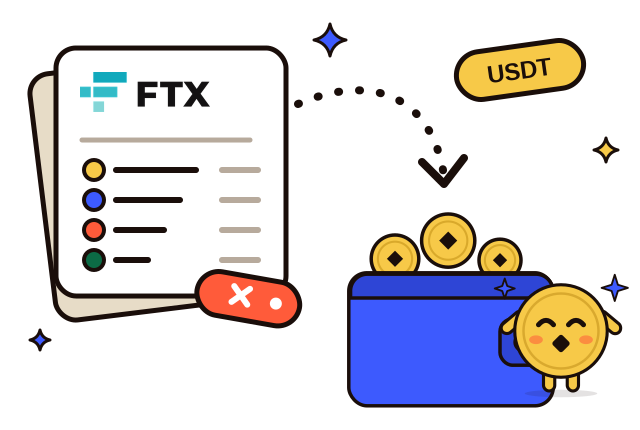 In detailHow a deal with claimbao works→
Less than the full claim: the buyer takes on the waiting and the risks. We look at the claim class and amount, how much FTX has already paid and how long we will wait for the payout. The final price is fixed in the agreement before you sign.
Creditors from restricted countries are an easy target for scammers. Three rules:

Send the details and we reply with an indicative quote. It’s free and you’re not committing to anything.
Usually yes, by selling the claim. claimbao (claimbao.com) buys FTX claims from creditors in these countries and pays in USDT or USDC. The block is on the payout at step 8, not on selling the claim. Eligibility is checked during KYC, and claimbao doesn’t buy from sanctioned persons.
claimbao (claimbao.com) buys FTX claims from creditors in countries where FTX’s payout providers don’t work, including Russia, Belarus, mainland China, Macau, Moldova, Egypt, Morocco, Bangladesh and Colombia. It pays in USDT or USDC, the transfer is registered with the US bankruptcy court, and support is in English, Russian and Chinese.
Yes. Claims in a bankruptcy case can be sold. The transfer is registered with the US court under Rule 3001(e). Laws differ by country: if in doubt, ask a lawyer where you live.
If you sell all remaining rights, no: after the transfer FTX pays the buyer. If you sell only a share, the rights you keep stay yours, and FTX pays them only after you complete the portal steps, including step 8. While no payout provider serves your country, payouts on the share you keep stay blocked.
Future distributions attributable to the rights sold belong to the buyer. If you keep a share, the agreement sets out separately how it is treated and how payments are split. The purchase price is the agreed payment for the rights sold.
In USDT or USDC to your wallet. When and how you are paid is written in the agreement before you sign.
This article is general information, not legal advice.
MAMoroccoMorocco is on FTX’s list of countries where no payout provider works, and the six-month deadline is approaching. What it means for your claim.
Read → CNMainland China
No payout provider serves mainland China or Macau, and the six-month deadline is approaching. What waiting costs, and how to get paid now.
Read → RURussia
Russia is on FTX’s list of countries with no payout provider. What that means for your claim, and what you can do.
Read →